Deadlock is Valve's unreleased third-person 6v6 hero-shooter MOBA set in a 1920s alternate New York. Here is what actually happens in a match.
What Is Deadlock? Valve's 6v6 MOBA Shooter, Explained
Deadlock is Valve's third-person multiplayer online battle arena. Two teams of six heroes push three lanes through a haunted alternate New York, farm souls, break the enemy base, and finish by completing a ritual on the opposing team's Patron. It reads like a hero shooter because you carry a gun, and plays like a MOBA because everything else works that way. It is also not out: as of October 3, 2026 the Steam store page reads Release Date: To be announced, with access limited to friend invites via playtesters.
Worth knowing before your first match:
- Genre: MOBA first, third-person shooter second. Souls decide the match, not headshots.
- Teams and win condition: six per side, and you win by destroying the enemy Patron.
- Price: none on Steam. You cannot buy it.
- Access: a Steam friend invite. There is no public sign-up queue.
Official source: Deadlock on Steam, store page and app record checked October 3, 2026.
What genre is it, really
The clearest answer is the tag list Steam shows on the store page: MOBA, Third-Person Shooter, Multiplayer, Hero Shooter, Team-Based, Competitive, Shooter, Action, PvP, Free to Play, Early Access, Strategy, Online Co-Op, Tactical. Steam hides that block while a game is unreleased, which is part of why the genre question keeps coming up. IGN's beginner guide calls it a MOBA like Dota 2 in third-person-shooter format. Polygon's explainer lands in the same place: Deadlock is a MOBA either way, whatever the team size.
Those tags are crowd-sourced and are not equals. What separates Deadlock from Overwatch or Marvel Rivals is the win condition. In a hero shooter the scoreboard is eliminations. In Deadlock a kill is mostly an income event, and the lane keeps producing whether or not anyone dies in it.
Is Deadlock out yet? No, and there is no public sign-up
The store page is unambiguous. As of October 3, 2026:
| Store field | What it says |
|---|---|
| Release Date | To be announced |
| Coming-soon banner | This game is not yet available on Steam |
| Notice | In early development with temporary art and experimental gameplay. Access is currently limited to friend invite via our playtesters. |
| Price | None. No purchase option exists |
| System Requirements | All fields TBD except Requires a 64-bit processor and operating system |
| Platform record | Windows yes, Mac no, Linux no |
The Free to Play tag is just a tag. Steam's app record for app 1422450 returns is_free as false with an empty package list, so there is no price and nothing to buy. You cannot buy your way into the playtest.
The invite arrives inside Steam, to a Steam friend, with no code and no external link. No invite key, no account top-up. Players also report that a Steam account which has never spent at least $5 is a hard blocker even with an active invite in hand. Read how to actually get a Deadlock invite before paying anyone.
What a match actually looks like
Three lanes, two heroes each. Community map references name them York (yellow), Broadway (blue) and Greenwich, also called Park (green); Valve's own City Never Sleeps page labels only Blue and Green, so treat the street names as community naming. Guides describing four lanes, including the current IGN beginner page, describe the pre-February 2025 map, which had a fourth purple Park Avenue lane before it was cut.
The game calls its minions troopers, and they are the clock on the match. Per Valve's March 6 and May 22, 2026 notes, waves arrive every 20 seconds past the 35-minute mark, troopers regenerate 7 HP out of combat, Medic Troopers gain 3 percent damage per minute, and middle-lane troopers upgrade when either shrine dies. Ziplines run above each lane, then it repeats: farm, spend, push. A first-three-matches walkthrough covers that minute by minute.
Why nobody is killing each other
Because souls are the real resource, and souls come from a schedule rather than from duels. Official bounty figures, current as of the June 30, 2026 patch with the September 16 revision noted:
| Event | Bounty |
|---|---|
| Trooper kill | 100 + 2 per minute |
| First blood | 125 |
| Guardian | 1250 |
| Walker | 3500 |
| Base structure | 200, scaling to 2200 at 40m |
| Soul Urn deposit | 250 + 70 per minute for the runner, decaying after 45s |
Deny is built into the numbers. Half the flying soul orb from a trooper kill is deniable, up from 40 percent in the June 30 patch, and orbs now drop from 45 meters instead of 35. Minimum unsecured souls fell from a flat 150 to 50 plus 5 per minute. Chasing a hero across a lane means missing the wave, so your laner farms behind you while you trade a bounty for a highlight.
Spending splits two ways. Souls buy shop items, and they feed Investment tracks that jump at fixed thresholds rather than smoothly. Thresholds below are from the May 22, 2026 patch, and Valve rebalances them:
| Souls invested | Weapon | Vitality | Spirit |
|---|---|---|---|
| 4.8k | 46 | 38 | 38 |
| 6.4k | 54 | 38 | 45 |
| 8k | 62 | 46 | 52 |
| 11.2k | 74 | 50 | 59 |
| 16k | 86 | 50 | 66 |
The item Golden Goose Egg makes the same point in item form: its permanent buff now triggers every 80 souls instead of every 100. Deaths are cheap early and expensive late, the opposite of most hero shooters: the respawn ramp runs from 8 to 35 seconds between minutes 5 and 20, and 38 seconds at the 20-minute mark. Dying in the first ten minutes costs a lane; dying at minute 25 costs the match.
If your team is losing but everyone keeps getting kills, the kills were the wrong purchase. Ask what the wave was doing during that fight and whether the orbs were collected. The souls guide covers last-hitting and the orb-confirmation problem players hit on the official forum.
The objective chain
Structure damage is a sequence, not a checklist you can do out of order:
- Guardian in each lane, the first thing between you and the enemy half. 1250 bounty.
- Walker behind it, a walking mech. 3500 bounty, 6000/9000/12000 HP by tier.
- Base Guardians, the pair at the base entrance. Killing them spawns a zipline-boosted trooper wave.
- Shrines, two of them. Invulnerable until one pair of Base Guardians dies, then 5000 HP followed by 10000, paying 2000.
- Patron, the thing the whole match was for.
The community wiki is blunt about the last step: each team's base houses a Patron, and victory comes from defeating the opposing Patron and completing the ritual. The pit rule is where most games get thrown away; how matches actually end covers it, and the map guide has lane geometry and the four new districts.
What is in the box, and what is not
Thirty-eight heroes were confirmed playable before City Never Sleeps. Six more were announced on September 29, 2026 and are releasing one at a time by community vote, two a week on Tuesdays and Fridays at 2:00pm PT, starting October 2 with Rat King. That makes 39 of 44 announced heroes playable on October 3. Valve has never published an official hero count, so treat 44 as arithmetic rather than a headline.
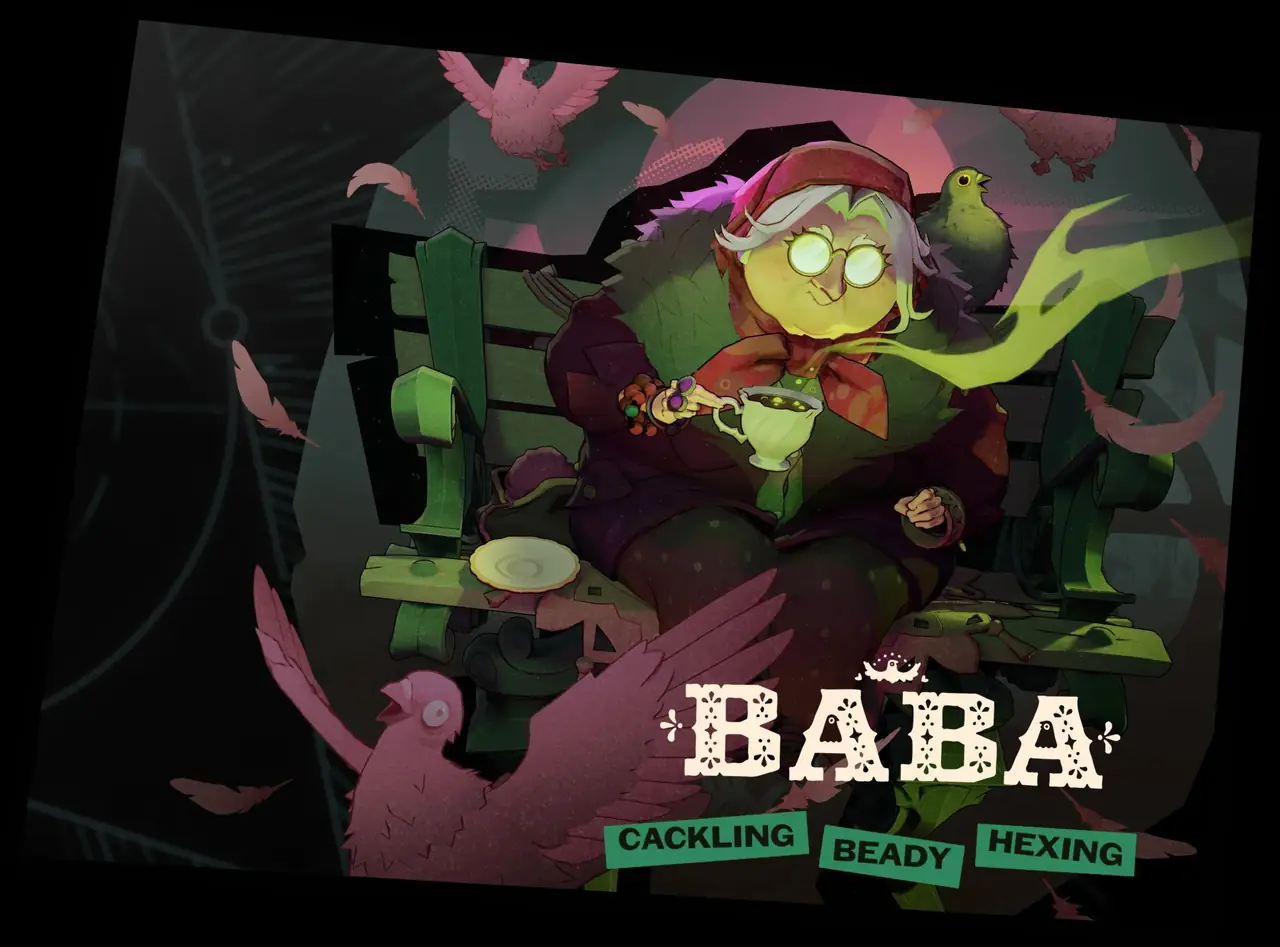
Baba, pictured above, is one of those six and has not landed; her slot is decided by the vote. The hero vote guide covers the current Pregame lobby rules, not the ballot-box rules most old write-ups still describe.
Ranked mode shipped in the July 30, 2026 matchmaking update, gated behind 60 Standard wins and three heroes with 15 Standard wins each. Street Brawl, the 4v4 mode, is a best-of-five with no farming and three drafted items per round.
The more interesting list is what is missing. In the same post that announced all of this, Valve named what it has not done: Midboss, Guardians and Walkers, hero remodels, plus speculative work on item redesigns and alternate modes. The City Never Sleeps breakdown covers what changed, and is it worth playing in 2026 weighs the trade-off without hyping or dunking.
The city is called the Cursed Apple and it is an alternate-history New York, but Valve has never stated a decade in its own materials and the store page gives none. Press has called it 1940s, and players guess from the 1920s to the 1950s. If you saw a confident year somewhere, it came from a fan wiki, not Valve.
Frequently Asked Questions
Is Deadlock free to play? The store page tags it Free to Play, but the app record reports is_free as false with an empty package list and no purchase option. There is no price and nothing to buy.
Is Deadlock out yet? No. Release Date reads To be announced, the page says the game is not yet available on Steam, and the notice still limits access to friend invites via playtesters.
Why do the teams keep not killing each other? Because souls decide the game and souls come from trooper waves, camps and objectives on a timer. A kill is worth far less than the wave you abandoned to go get it.
Related Guides
- How to Get Deadlock Invite in 2026 — the hardest blocker for anyone starting out.
- Deadlock Beginners Guide: Your First Three Matches — turns an invite into a competent laning phase.
- Deadlock Souls Guide — the economy that decides the match.
More Deadlock Guides
How many heroes Deadlock has right now, who the 2026 vote rounds added, and how to pick a role instead of memorising a tier chart.
You cast one hero vote per Standard or Street Brawl match at the Pregame ballot box. The winning team counts double, first win of day doubles again.
Three lanes, four new Districts between them, and the Haunts that spawn in each. What City Never Sleeps changed about where you fight.
Every tier list is stale within a patch. How to judge strength from mobility, damage and role fit instead of copying a chart.
Stamina, dash into slide, slide hop, mantle and wall jump - the movement tech that decides fights, explained as mechanics.
Rat King landed Oct 2. The next five City Never Sleeps heroes drop Tuesdays and Fridays at 2pm PT through Oct 20, in the order players vote.
Destroy Guardians, then Walkers, expose the Patron, and burn it down. Why the Archmother pit punishes grouped pokes.
Deadlock is CPU-bound on Source 2. Shader cache, launch options, and the graphics settings that actually move teamfight frames.